.jpg "Bella-Stock-Welcome Sign")

The post How to Create an Indoor Herb Garden appeared first on Butterfield Apartments Blog.
]]>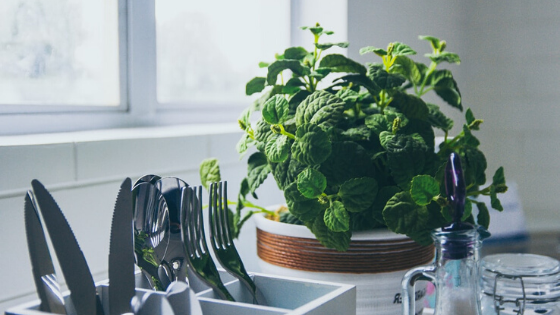 There are several excellent reasons to grow herbs indoors: You'll have fresh, fragrant greenery in your living space and organic herbs readily available. Some herbs also have medicinal properties, making them great for adding to a hot bath or tea. Research also shows that indoor plants improve air quality and can decrease stress levels.
Luckily, you don't need to have much of a green thumb to grow an indoor herb garden in one of our Flagstaff apartments. All you need are some basic gardening supplies, a sunny surface, and a bit of TLC.
Know what to plant
Low-maintenance herbs including basil, thyme, rosemary, oregano, mint, and chives all do very well indoors. It's recommended to start an herb garden from seeds, which you can find at your local home improvement store.
Pick a planter
Herbs can be grown in almost any container but will need to be re-potted if they start to outgrow it. The soil also needs to be able to drain, so be sure your container has holes on the bottom and a saucer for excess water.
Soak up the sun
Herbs need six to eight hours of direct sunlight each day to thrive, so find a sunny spot for the plants. Windowsills or patios are ideal.
Just add (a little) water
One of the reasons people like herb gardens is that they require very little water. The soil should be just visibly moist. Watch for yellow or wilted leaves, which are signs the plant is being over-watered.
Enjoy fresh herbs
Once your herbs have started to grow, it's time to harvest them. Pay attention to when their flowers begin to bud and cut herbs just before they bloom. Use shears and never take more than a quarter of the plant at once.
At our apartments in Flagstaff, spring is the perfect time to plant an indoor herb garden. Contact us today to check out our newly renovated apartment homes!
The post How to Create an Indoor Herb Garden appeared first on Butterfield Apartments Blog.
]]>The post How to Plant a Balcony Succulent Garden appeared first on Butterfield Apartments Blog.
]]>
Apartments look especially nice when you integrate natural elements from the outdoors into your décor! The dry climate in Arizona means that you’ll be able to easily grow succulents indoors. Since you have a private balcony or patio, why not make it feel more natural with a display of succulents? Here’s how to plant a balcony succulent garden.
How to Plant a Balcony Succulent Garden
What Is a Succulent?
Succulents are very small plants that are related to cacti. They grow close to the ground and store water in their thick leaves. Because succulents are so hardy, they make excellent potted plants. Even if you never thought you had a green thumb, you’ll probably do very well with succulents.
There are many different kinds of succulents. When you visit the plant nursery, choose a wide variety. This will ensure that you can create a very interesting balcony succulent garden when you get back to your apartment home. Pick up some small pots to hold your new succulents. If you have some favorite antique teacups, you can even use those! You could also plant all your succulents in one large container, such as a pretty window box.
Soil and Drainage Needs
Succulents need to have good drainage to thrive. Poke some holes in the bottom of your succulent containers to let water flow through. The soil should be a mixture of sand, pebbles, gravel, and perlite. You can purchase these separately and blend them together at home.
How to Plant Succulents
Succulents should be planted very shallow in the pots. Don’t worry about digging deep for the roots. The succulent will acclimate over time. Water your balcony succulent garden very infrequently. You’ll be able to tell when they need water; the leaves will become thinner and less “puffy.”
Having a balcony succulent garden will make your Flagstaff apartment feel even more like Arizona. For more ideas about Southwestern décor or to view available floor plans, please contact us.
The post How to Plant a Balcony Succulent Garden appeared first on Butterfield Apartments Blog.
]]>